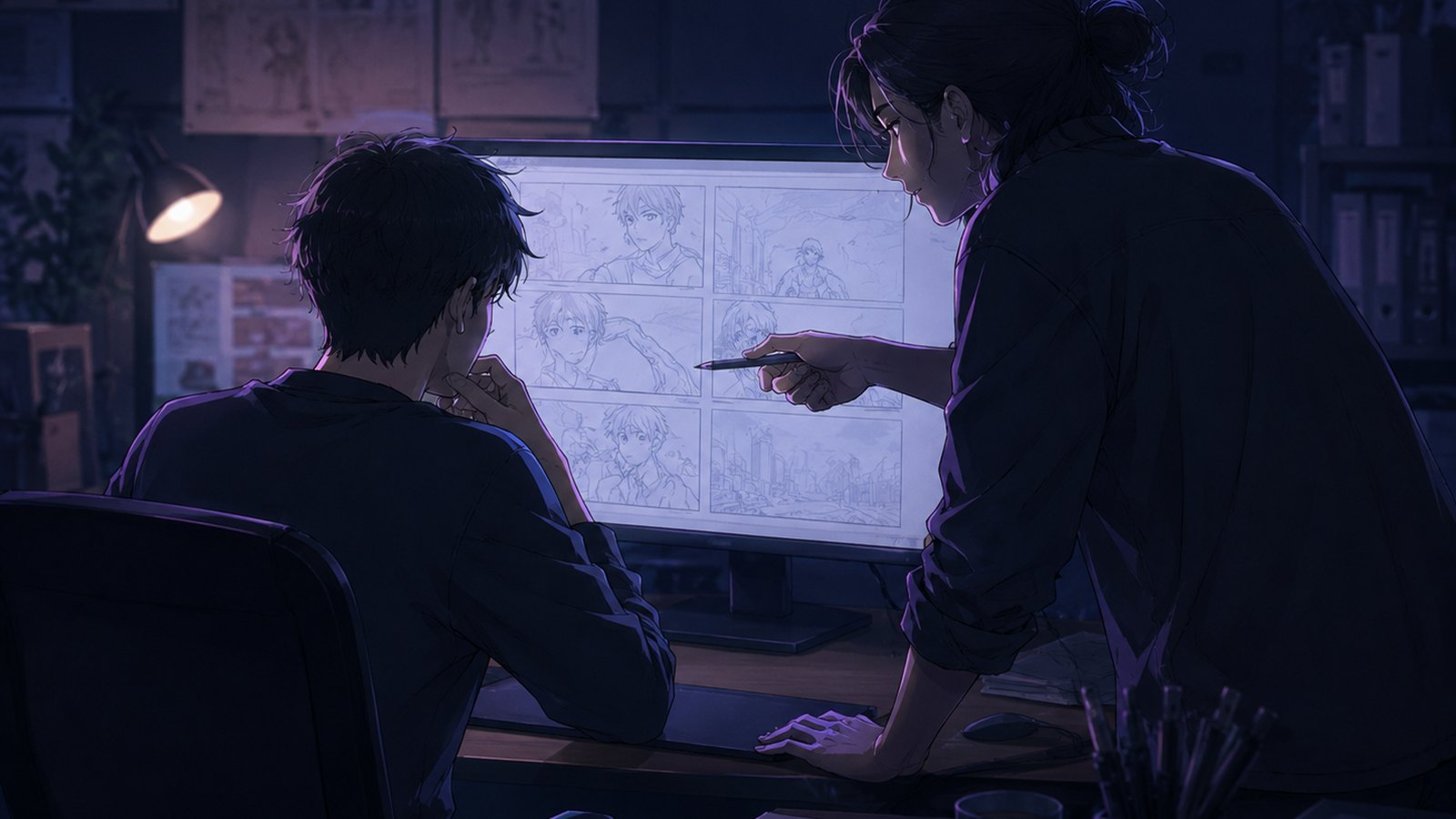
by Miquel Farré
by Disha Gupta • September 10, 2026
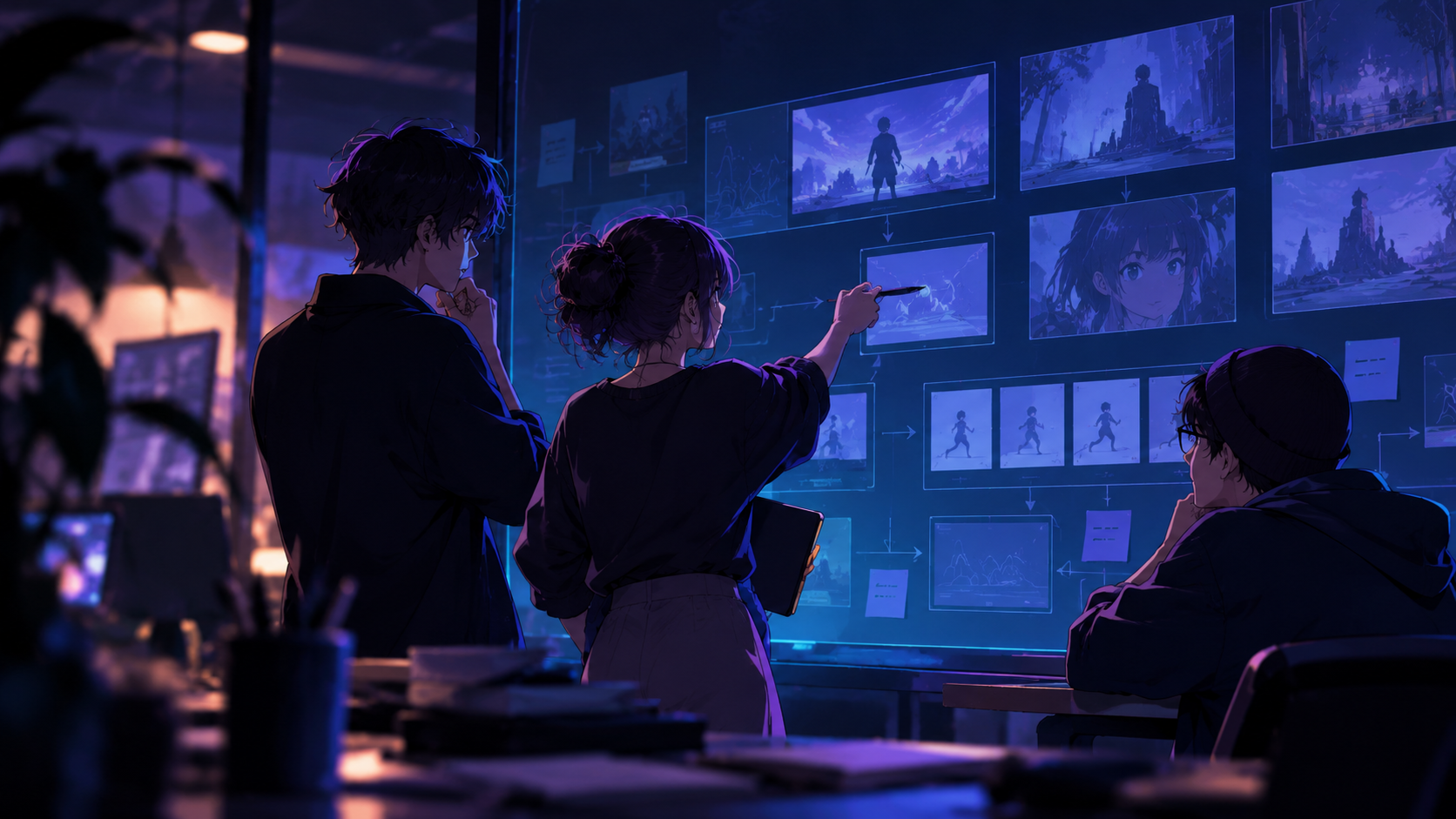
The value of creative software can no longer be measured only by what it generates, or how fast. It has to be measured by how well it helps creators bring original, human-centred stories to life - because creators are at the centre of storytelling.
And it is human emotion that creates a connection that no AI can replicate alone.
At Studio Jadu, we made a deliberate choice: the creator, not the platform, drives every decision.
Most AI tools treat human creativity as an input to a generation engine. We built AIDA - our AI Director's Assistant and the engine behind Studio Workbench - to do the opposite: to put control in the creator's hands at every step. Not just a promise, but something you feel the moment you start creating.
The “human fingerprint” is the recognizable imprint of a creator’s point of view or intent across a piece of work. It shows up as the choices a creator makes about story, style, composition, performance, and what it all means. And it's what an audience feels long after the screen goes dark.
When creative work becomes abundant, as it is today, that fingerprint is what says: This work is still distinct. This work is still human.
The best storytelling tools help creators translate their vision into a visual story that stays with people - not because the AI made it look good, but because a human made it mean something.
We built AIDA on four principles we believed were essential to preserving the human fingerprint.
Together, these principles led us away from the idea of “prompt-to-film” shortcuts.
The platform does not begin by asking creators to generate an image or video. It begins by helping them define the creative intent behind their work: its central themes, characters, visual language, cinematic references, and the world that story takes place in.
From there, AIDA helps the creator translate that vision into acts, scenes, beats, and individual shots. It can propose structures or visual approaches, but it also explains its recommendations and waits for the creator to validate, reject, or redirect them.
In this process, AI accelerates execution without assuming authorship. The software's purpose isn't to make creative decisions disappear - it is to help creators carry their vision all the way from the first idea to the finished frame.
AI can produce options quickly. The creator’s role is to define how these options serve the story.
One example is SENTINELS, a psychological-supernatural horror animation series produced by Studio Jadu and created by bestselling author Ajinkya Bhasme. Set around North Sentinel Island, the series presented our artists with a specific creative challenge: how to build a world that feels unstable, threatening, and beyond human control.
Establishing that creative intent came down to a set of deliberate choices - about story, character, atmosphere, art style and the visual language that would carry all of it.
The creative decisions were entirely the team's - made before a single frame was generated.
The story's themes, the world's atmosphere, the characters' emotional logic, the visual language that would hold it all together: moving watercolor backgrounds to make the world feel unstable, hard outlines to separate the characters from their surroundings, oil-painted fire to give nature an ancient, overwhelming presence. These weren't suggestions from a model. They were deliberate human choices.
AI then helped carry that vision across the series. It sped up frame development and iteration - and at every step, the artists judged whether each result belonged: Did the fire feel powerful enough to dominate the scene? Did each shot carry the emotional weight the scene needed?
SENTINELS is one example of what that looks like in practice.
We built AIDA so this kind of intentionality is built into every stage of the process
The creator establishes the story, the world, and the visual language. AIDA helps develop the structure, and at every step - whether generating sketches, images, or video - the creator directs each decision before the platform executes it. Nothing is generated without a human choice behind it. And every choice made early in the process carries through to the finished frame.
Every creative tool makes choices about what to make easier and what to preserve in the creative process.
As generative technology improves, producing an impressive animation will become the norm. What will matter most is whether the software can help creators turn their original intent into a story that feels unmistakably theirs - with a point of view and a visual style that couldn't have come from anyone else.
That's what we're building toward - giving creators with a clear vision, the tools to tell their story their way, at speed and without creative compromise.
We build every feature with that belief at the center - that it's not just what you build, but how you build it. Better creative output, yes. But more importantly - output that is still unmistakably human.
Curious what else we’ve been up to? Read our post on what we’ve been building and why.
by Miquel Farré
by Masoud Loghmani
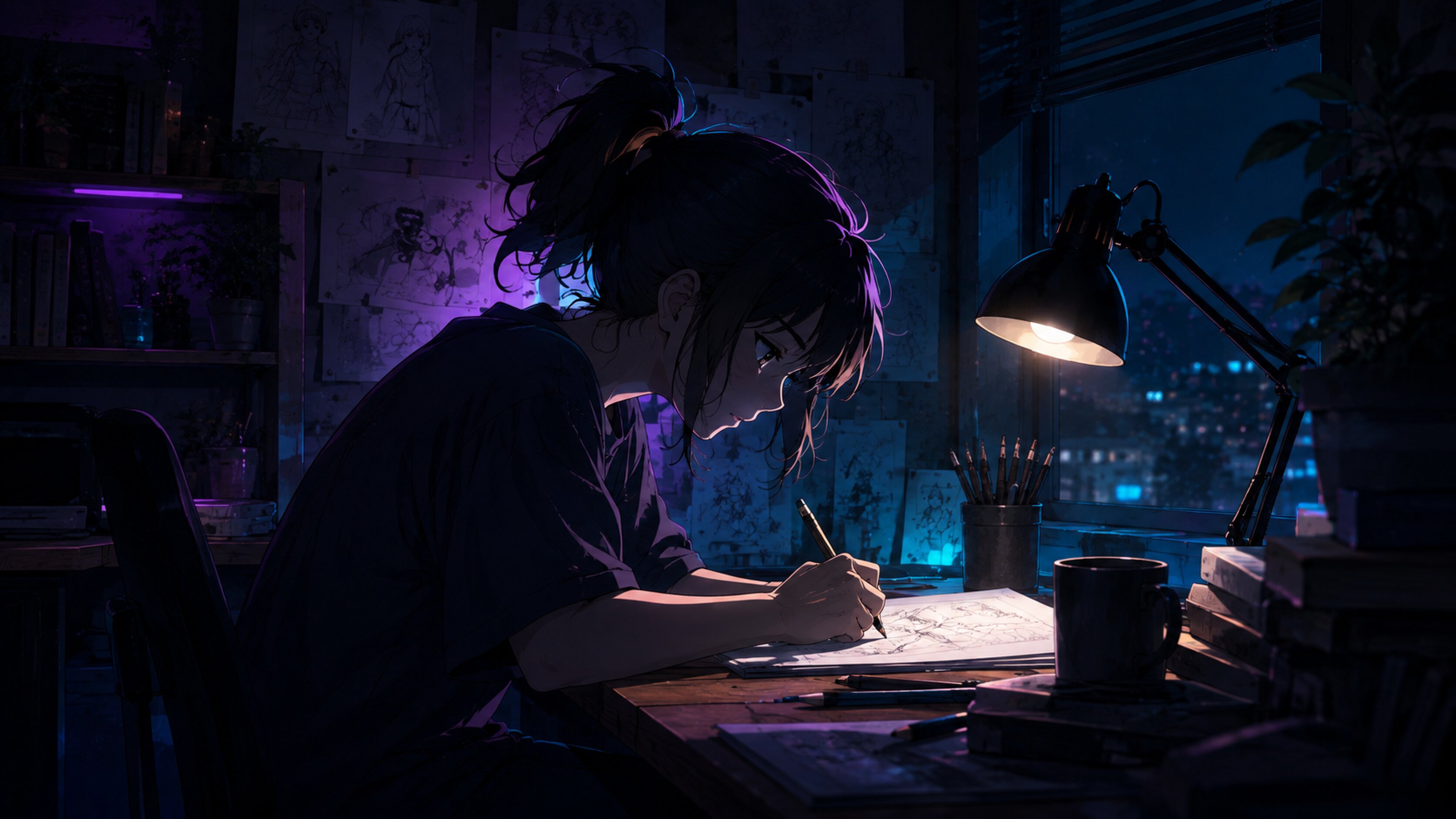
by Ruchir Joshi
by Disha Gupta • September 10, 2026
The value of creative software can no longer be measured only by what it generates, or how fast. It has to be measured by how well it helps creators bring original, human-centred stories to life - because creators are at the centre of storytelling.
And it is human emotion that creates a connection that no AI can replicate alone.
At Studio Jadu, we made a deliberate choice: the creator, not the platform, drives every decision.
Most AI tools treat human creativity as an input to a generation engine. We built AIDA - our AI Director's Assistant and the engine behind Studio Workbench - to do the opposite: to put control in the creator's hands at every step. Not just a promise, but something you feel the moment you start creating.
The “human fingerprint” is the recognizable imprint of a creator’s point of view or intent across a piece of work. It shows up as the choices a creator makes about story, style, composition, performance, and what it all means. And it's what an audience feels long after the screen goes dark.
When creative work becomes abundant, as it is today, that fingerprint is what says: This work is still distinct. This work is still human.
The best storytelling tools help creators translate their vision into a visual story that stays with people - not because the AI made it look good, but because a human made it mean something.
We built AIDA on four principles we believed were essential to preserving the human fingerprint.
Together, these principles led us away from the idea of “prompt-to-film” shortcuts.
The platform does not begin by asking creators to generate an image or video. It begins by helping them define the creative intent behind their work: its central themes, characters, visual language, cinematic references, and the world that story takes place in.
From there, AIDA helps the creator translate that vision into acts, scenes, beats, and individual shots. It can propose structures or visual approaches, but it also explains its recommendations and waits for the creator to validate, reject, or redirect them.
In this process, AI accelerates execution without assuming authorship. The software's purpose isn't to make creative decisions disappear - it is to help creators carry their vision all the way from the first idea to the finished frame.
AI can produce options quickly. The creator’s role is to define how these options serve the story.
One example is SENTINELS, a psychological-supernatural horror animation series produced by Studio Jadu and created by bestselling author Ajinkya Bhasme. Set around North Sentinel Island, the series presented our artists with a specific creative challenge: how to build a world that feels unstable, threatening, and beyond human control.
Establishing that creative intent came down to a set of deliberate choices - about story, character, atmosphere, art style and the visual language that would carry all of it.
The creative decisions were entirely the team's - made before a single frame was generated.
The story's themes, the world's atmosphere, the characters' emotional logic, the visual language that would hold it all together: moving watercolor backgrounds to make the world feel unstable, hard outlines to separate the characters from their surroundings, oil-painted fire to give nature an ancient, overwhelming presence. These weren't suggestions from a model. They were deliberate human choices.
AI then helped carry that vision across the series. It sped up frame development and iteration - and at every step, the artists judged whether each result belonged: Did the fire feel powerful enough to dominate the scene? Did each shot carry the emotional weight the scene needed?
SENTINELS is one example of what that looks like in practice.
We built AIDA so this kind of intentionality is built into every stage of the process
The creator establishes the story, the world, and the visual language. AIDA helps develop the structure, and at every step - whether generating sketches, images, or video - the creator directs each decision before the platform executes it. Nothing is generated without a human choice behind it. And every choice made early in the process carries through to the finished frame.
Every creative tool makes choices about what to make easier and what to preserve in the creative process.
As generative technology improves, producing an impressive animation will become the norm. What will matter most is whether the software can help creators turn their original intent into a story that feels unmistakably theirs - with a point of view and a visual style that couldn't have come from anyone else.
That's what we're building toward - giving creators with a clear vision, the tools to tell their story their way, at speed and without creative compromise.
We build every feature with that belief at the center - that it's not just what you build, but how you build it. Better creative output, yes. But more importantly - output that is still unmistakably human.
Curious what else we’ve been up to? Read our post on what we’ve been building and why.
by Miquel Farré
by Masoud Loghmani
by Ruchir Joshi
by Disha Gupta • September 10, 2026
The value of creative software can no longer be measured only by what it generates, or how fast. It has to be measured by how well it helps creators bring original, human-centred stories to life - because creators are at the centre of storytelling.
And it is human emotion that creates a connection that no AI can replicate alone.
At Studio Jadu, we made a deliberate choice: the creator, not the platform, drives every decision.
Most AI tools treat human creativity as an input to a generation engine. We built AIDA - our AI Director's Assistant and the engine behind Studio Workbench - to do the opposite: to put control in the creator's hands at every step. Not just a promise, but something you feel the moment you start creating.
The “human fingerprint” is the recognizable imprint of a creator’s point of view or intent across a piece of work. It shows up as the choices a creator makes about story, style, composition, performance, and what it all means. And it's what an audience feels long after the screen goes dark.
When creative work becomes abundant, as it is today, that fingerprint is what says: This work is still distinct. This work is still human.
The best storytelling tools help creators translate their vision into a visual story that stays with people - not because the AI made it look good, but because a human made it mean something.
We built AIDA on four principles we believed were essential to preserving the human fingerprint.
Together, these principles led us away from the idea of “prompt-to-film” shortcuts.
The platform does not begin by asking creators to generate an image or video. It begins by helping them define the creative intent behind their work: its central themes, characters, visual language, cinematic references, and the world that story takes place in.
From there, AIDA helps the creator translate that vision into acts, scenes, beats, and individual shots. It can propose structures or visual approaches, but it also explains its recommendations and waits for the creator to validate, reject, or redirect them.
In this process, AI accelerates execution without assuming authorship. The software's purpose isn't to make creative decisions disappear - it is to help creators carry their vision all the way from the first idea to the finished frame.
AI can produce options quickly. The creator’s role is to define how these options serve the story.
One example is SENTINELS, a psychological-supernatural horror animation series produced by Studio Jadu and created by bestselling author Ajinkya Bhasme. Set around North Sentinel Island, the series presented our artists with a specific creative challenge: how to build a world that feels unstable, threatening, and beyond human control.
Establishing that creative intent came down to a set of deliberate choices - about story, character, atmosphere, art style and the visual language that would carry all of it.
The creative decisions were entirely the team's - made before a single frame was generated.
The story's themes, the world's atmosphere, the characters' emotional logic, the visual language that would hold it all together: moving watercolor backgrounds to make the world feel unstable, hard outlines to separate the characters from their surroundings, oil-painted fire to give nature an ancient, overwhelming presence. These weren't suggestions from a model. They were deliberate human choices.
AI then helped carry that vision across the series. It sped up frame development and iteration - and at every step, the artists judged whether each result belonged: Did the fire feel powerful enough to dominate the scene? Did each shot carry the emotional weight the scene needed?
SENTINELS is one example of what that looks like in practice.
We built AIDA so this kind of intentionality is built into every stage of the process
The creator establishes the story, the world, and the visual language. AIDA helps develop the structure, and at every step - whether generating sketches, images, or video - the creator directs each decision before the platform executes it. Nothing is generated without a human choice behind it. And every choice made early in the process carries through to the finished frame.
Every creative tool makes choices about what to make easier and what to preserve in the creative process.
As generative technology improves, producing an impressive animation will become the norm. What will matter most is whether the software can help creators turn their original intent into a story that feels unmistakably theirs - with a point of view and a visual style that couldn't have come from anyone else.
That's what we're building toward - giving creators with a clear vision, the tools to tell their story their way, at speed and without creative compromise.
We build every feature with that belief at the center - that it's not just what you build, but how you build it. Better creative output, yes. But more importantly - output that is still unmistakably human.
Curious what else we’ve been up to? Read our post on what we’ve been building and why.
by Miquel Farré
by Masoud Loghmani
by Ruchir Joshi